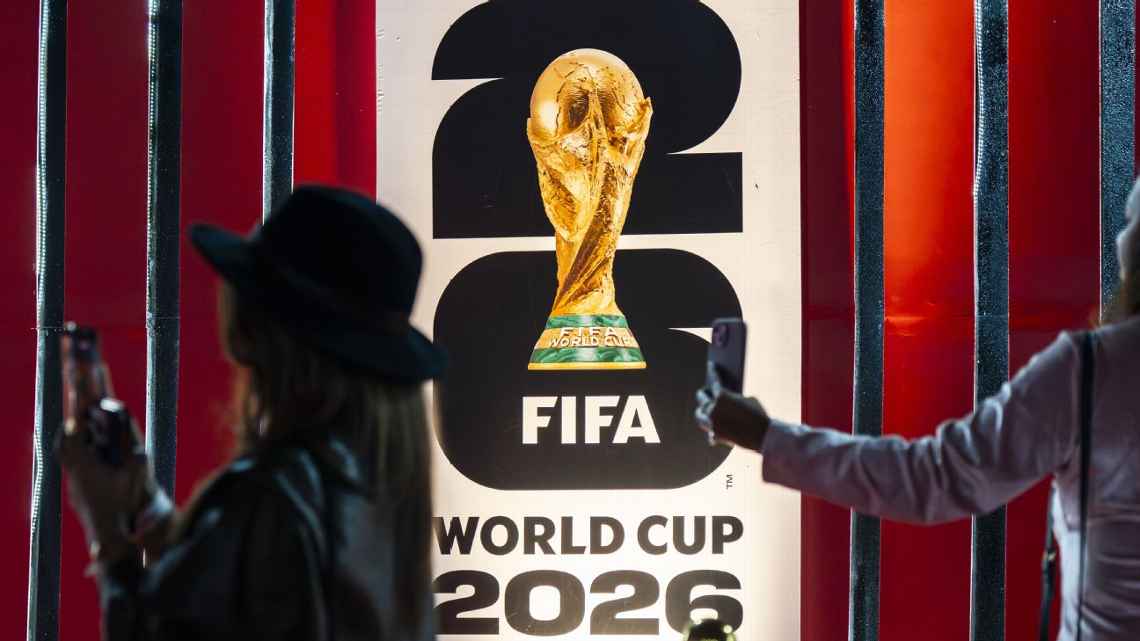
FIFA reports over 500 million ticket requests for the 2026 World Cup during the application window, which ended Tuesday.
Tickets for specific matches went on sale at set prices after the schedule’s release. FIFA will randomly select applicants and give them tickets for the 104 World Cup matches in February.
FIFA had already sold roughly 2 million tickets before the schedule was finalized in October and November. Approximately four to five million tickets are left for the tournament.
Since each request is for 1 to 4 tickets, the 500 million requests likely represent demand for over 1 billion tickets. This suggests the World Cup is oversubscribed, though a match-by-match breakdown could differ.
FIFA announced on Wednesday that the most popular matches were:
- Colombia vs. Portugal
- Mexico vs. the Republic of Korea
- The World Cup final
- Mexico vs. South Africa (the World Cup opener)
- The round-of-32 match in Toronto on July 2, which will likely feature either Portugal or Colombia vs. the runner-up in England’s group
FIFA did not specify the number of requests per match, and a spokesman would not provide further details.
Industry professionals were predicting a massive draw for late-stage games, especially those featuring teams like Mexico, Argentina, Colombia, and Portugal.
FIFA’s ticket prices, seen as “extortionate,” are based on high demand. The organizers have discouraged some fans at home and overseas, who have chosen to watch the games on television.
Others were eager to pay the prices. Much of FIFA’s inventory was quickly purchased during October and November presales. As demand increased, FIFA raised prices, but even those are lower than on resale sites like StubHub or Vivid Seats, which gauge demand better.
Ticket resale costs may drop for unpopular games as the World Cup nears, as early purchasers hope to sell their tickets.
Prices for popular games might increase in February. This is when fans will know if they got tickets, and those who did not will rely on resale markets.
With secondary-market demand expected, scalpers who buy and resell tickets for profit are likely to have made some of the 500 million requests.
It’s unknown whether FIFA has tried to prevent scalpers from the ticket lottery. FIFA officials announced in September that they would “cleanse” data to eliminate bots and stop scalping. The Wednesday release stated that “each application [was] validated by unique credit card data,” though some applications might still be rejected for exceeding household limits or other application rules.
It is not known if FIFA will give all remaining tickets to the millions who applied last month or save some for a final sale in the spring.
FIFA will announce the results of the random draw to fans on or after February 5. Applications can be successful (all tickets granted), partially successful (some tickets granted) or unsuccessful.
The tournament begins in Mexico City on June 11, and wraps up in New Jersey on July 19. Sixteen cities across North America will host the 104 games.
About The Author